Why the Underdog Is Almost Always Overpriced — And How to Profit From the Favorite Bias
Here's something the sportsbooks count on: most recreational bettors want to bet on winners. They want to back the team they think is going to win, feel the comfort of being on the right side, and collect their payout. The problem is that betting on who wins and betting for value are two completely different activities — and confusing them is one of the most expensive mistakes you can make.
The result of all that public money chasing favorites? A systematic distortion in moneyline pricing that shows up week after week, sport after sport. Favorites get slightly worse odds than they deserve. Underdogs get slightly better odds than they'd get in a purely efficient market. And if you know where to look, that inefficiency is quietly beatable.
The Basics: How Moneylines Get Set
A moneyline is the simplest bet in sports betting — you're just picking who wins. No spread, no point total, just a winner. The odds reflect the implied probability of each outcome, with the vig built in to ensure the book profits regardless of the result.
Here's a simple example. If a book sets a favorite at -160 and an underdog at +135, the implied probabilities are roughly 61.5% and 42.6% respectively — which adds up to more than 100% because that excess is the vig. In a perfectly efficient market, those implied probabilities would reflect the true likelihood of each outcome as closely as possible.
But markets aren't perfectly efficient. They're shaped by the behavior of the people betting into them. And when the majority of bettors systematically prefer one side, the book adjusts to balance its liability — which means the price drifts away from the mathematically correct number.
The Favorite Bias: Where the Distortion Comes From
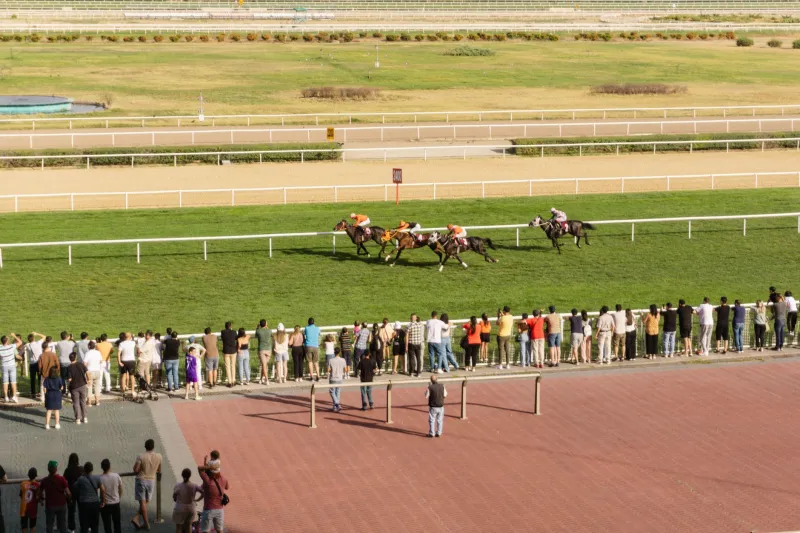
Researchers have studied this for decades, and the finding is remarkably consistent across sports: the public overvalues favorites and undervalues underdogs on the moneyline. This is sometimes called the "favorite-longshot bias," and while it's most extreme in horse racing, it shows up clearly in NFL, NBA, and MLB betting markets too.
The mechanism is straightforward. When a large portion of bettors want to back the favorite, the book takes in more money on that side. To balance its exposure, the book shades the price — making the favorite slightly worse odds and the underdog slightly better odds than the true probability would suggest. The book isn't doing you a favor on the underdog side; it's managing its own risk. But the effect is the same: underdogs are consistently priced at slightly better than fair value, and favorites are slightly worse.
In NFL data going back to the legalization era, underdogs have covered the moneyline at a rate that slightly exceeds what their implied probability predicts — particularly in the +150 to +250 range. The effect isn't dramatic, but it's persistent and it compounds over volume.
The Spread vs. Moneyline Disconnect
Here's where it gets really interesting for analytical bettors. The point spread market and the moneyline market price the same game — but they don't always agree with each other.
In theory, you can convert any point spread into an implied moneyline using historical data about how often teams win straight up from various spread positions. In the NFL, a 3-point favorite wins outright roughly 57-58% of the time. That should translate to a moneyline of approximately -135 to -140. But frequently, you'll see that same 3-point favorite priced at -155 or -165 on the moneyline — significantly worse than what the spread implies.
That gap is the favorite premium. The public wants to bet the favorite straight up, and the book charges them for it. Meanwhile, the underdog moneyline at +140 or +145 is offering better value than the spread-implied probability suggests.
This is a concrete, mathematical inefficiency you can check yourself. Use a spread-to-moneyline converter (plenty of free tools exist online), compare the implied moneyline to the posted moneyline, and look for underdogs where the gap is meaningful — say, 8 to 12 cents or more.
Where This Edge Is Biggest
The favorite bias isn't uniform across all sports. It tends to be most pronounced in the NFL and college football, where public interest is highest and casual money flows heaviest. It's also significant in high-profile NBA matchups, particularly when a marquee team like the Lakers or Warriors is involved.
In MLB, the picture is more nuanced. Baseball has more games, more sophisticated bettors, and a longer history of moneyline betting — which means the market is somewhat more efficient. But even in baseball, the bias shows up in games featuring nationally popular teams.
The sweet spot for underdog value tends to be in the +130 to +220 range. Heavy underdogs at +350 or beyond often carry genuine longshot risk that exceeds the bias correction — the bias can't save you from a team that's genuinely overmatched. And slight underdogs at +105 to +115 may not offer enough of a premium to justify the research.
A Framework for Finding Underdog Value
Start with the spread. Find the implied moneyline for the spread using a converter, then compare it to what's actually posted. If the underdog's posted moneyline is 10+ cents better than the spread implies, that's a signal worth investigating further.
Next, check line movement. If the underdog line has moved toward even money since opening — say, from +180 to +155 — sharp money may be on the favorite and the value has eroded. But if the underdog line has stayed flat or drifted longer while the spread has moved, that's a potential inefficiency.
Finally, shop lines. The favorite bias means the underdog price varies more across books than you might expect. A +155 at one book might be +170 at another. On a $200 bet, that's $30 in your pocket before the game even starts.
The public is always going to love backing favorites. That's human nature, and sportsbooks have built their business model around it. But understanding why that creates value on the other side — and having a systematic way to find it — is exactly the kind of smarter betting that separates disciplined players from the crowd.